There is a well known 2011 study that looks at the brains of London taxi drivers. The map of London is complex, and taxi drivers are required to memorize the complete layout and pass a difficult exam before being given their taxi license. The study found that the hippocampus region of the brain, which plays an important role in memory, actually grows (in a physical sense) while the prospective drivers are studying for the exam. This is an interesting result since it clearly shows that our actions can make real, measurable changes to our brains.


Can you change your brain with therapy?

In short, yes.

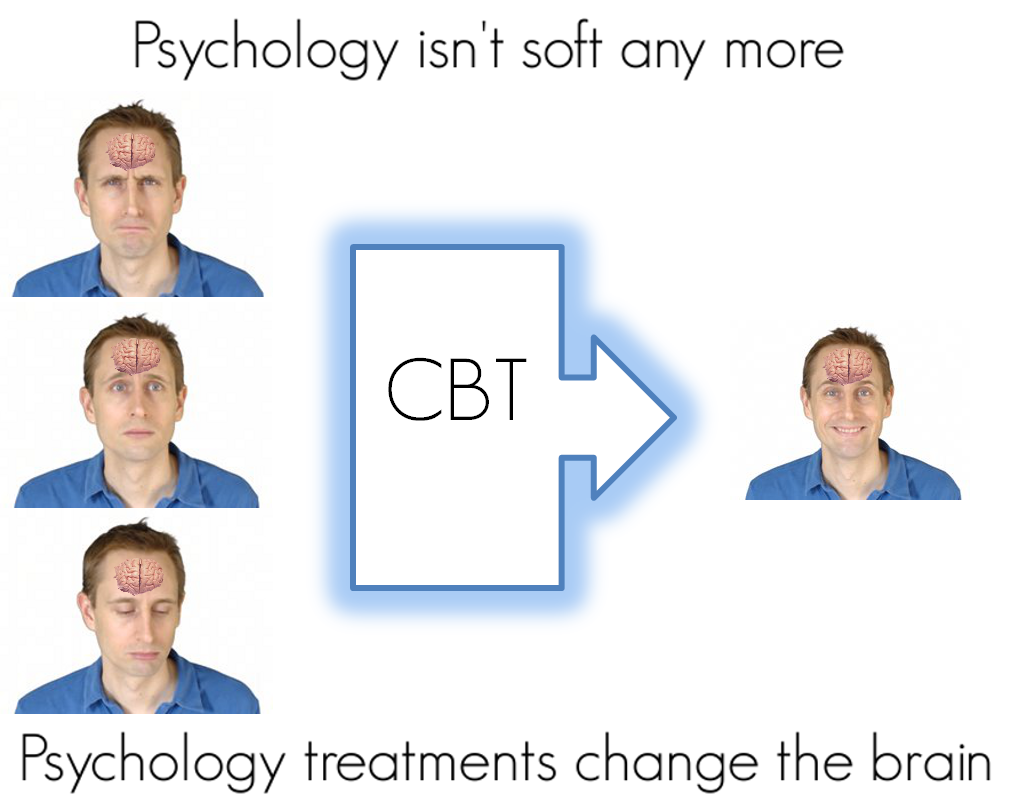
Some people view psychological treatments as “softer” than using medication, since drugs can directly target neurochemical aspects of the brain. However, this view is unjustified, since there is mounting evidence that therapy can make very real structural changes to the brain. A great example is CBT.

Cognitive behavior therapy (CBT) is an evidence-based approach to tackling mental health problems, such as anxiety or depression. CBT has been subject to countless clinical trials, and has even been shown to be more effective than medication in some long-term studies. CBT works by targeting the thoughts and behaviours that are maintaining the problem (more information about CBT, and how it can be administered online, can be found here). For example, consider someone who has social anxiety and would like to ask their boss for a raise or promotion. This would be extremely stressful situation for them, and they would likely put it off indefinitely. CBT treatment would examine the thoughts that are leading to this avoidance, and would challenge them through a series of exercises. In much the same way that physical exercise changes the body, these mental exercises can make changes to the structure of your brain!


How does CBT change the brain?

The fact that CBT changes the brain is not a particularly new result. However, neuroscience journals tend to announce findings with headlines like “The neurobiological role of the dorsolateral prefrontal cortex in…”. The details are complex, but the general idea is understandable in surprisingly basic terms.

The brain is divided into different regions or modules, each of which is specialized to perform a certain type of task. For example, the visual cortex is the region of the brain that processes the sensory input from the eyes. There are some brain structures that deal with emotions such as stress and fear, and collectively these are sometimes known as the “emotional brain”. These are very “old” areas of the brain, in the sense that we share them with our distant ancestors. When a socially anxious person is nervous when thinking about asking for a raise, it is the emotional brain that is becoming active.

There are higher order brain structures that deal with planning, logic and reasoning. These are sometimes known as the “logical brain”. These brain areas, such as the prefrontal cortex, are “newer” in the sense that they are much larger in primates than in other species. There are two key points:

  • The logical brain is able to override the emotional brain. For example, our socially anxious person can take a rational look at the situation, and realize that he or she is exaggerating the potential risks. He or she might come to the conclusion “the worst case scenario is that the boss says no – that’s not the end of the world!” This thought will help them calm down, and build the confidence to actually ask for the raise.
  • Every time the logical brain overrides the emotional brain, the logical brain “muscle” becomes stronger and stronger. In other words, through CBT training the brain actually reinforces the neural pathways, so it becomes easier and easier to deal with future stressful situations.

This is good news: by changing our thinking and behaviour using CBT, we are making positive, long term, hard coded changes to our brains!



softonline


fdh


Fjola  Helgadottir, PhD, MClinPsych, is a clinical psychologist, a senior research clinician at the University of Oxford, and is a co-creator of AI-Therapy.com, an online CBT treatment program for overcoming social anxiety
 

After my first year of university in Iceland, I decided I wanted to go traveling over the summer break. At the time, backpacking to Asia hadn’t really taken off in Iceland, so most people thought I was absolutely insane. However, I had set my mind and excel file to it, so there was no stopping me. After a year of working nights at a psychiatric hospital and eating nothing but pasta, I said goodbye to my teary family and set off into the big unknown world!

I traveled to Japan, South Korea, China, Mongolia, Philippines, Brunei, Singapore, Indonesia, Malaysia, Thailand, Cambodia, Vietnam, and Hong Kong, and it was all amazing. There is no better way to learn about people than to travel to different cultures. In fact, I think I learned more about people on that trip than during my first few years of studying psychology.

“I got scammed in Thailand” is the story that most people like to hear about.

After coming back from a big backpacking trip, people often want to hear about the tough stuff. The tricky situations, the scams, the bad food, bed bugs, etc. These usually make the best stories, so obviously you don’t give equal weight to the 95% of the trip that ran smoothly. Unfortunately, focusing on these stories can have a negative side-effect. It can fuel the fears that others have about unknown places. You should always be aware of this negative bias when you are gathering information about a place you want to visit.

Speaking to locals in other countries can give an interesting perspective on negative biases

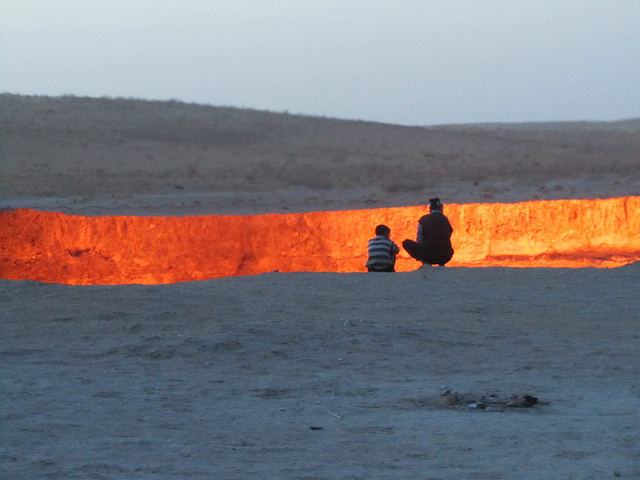
It can be very interesting to talk to people in other countries about their impressions of where you come from. For example, few years back I traveled through a country called Turkmenistan (don’t worry if you haven’t heard of it – I hadn’t either). I took the picture below one night when we camped next to the Derweze gas crater.

Burning for 35 years in Turkmenistan's desert
Burning for 35 years in Turkmenistan’s desert

Turkmenistan is both fascinating and terrifying at the same time. A quick read about the terrible human rights violation gives you an idea of what I mean. However, I had a conversation with a local girl that made an impression on me. She had been invited to study arts in Seattle, but turned it down because in her mind, the US is far too dangerous to visit.

This was an eye opener to me, as I felt much more vulnerable in Turkmenistan than I ever have in America. It was a great illustration of the idea that we often overestimate the dangers associated with things we’re unfamiliar with.

What is the lesson in this? Don’t let your fear of the unknown or familiarity biases stop you from going outside your comfort zone. Life is too short!


fdh


Fjola  Helgadottir, PhD, MClinPsych, is a clinical psychologist, a senior research clinician at the University of Oxford, and is a co-creator of AI-Therapy.com, an online CBT treatment program for overcoming social anxiety
 

Blushing


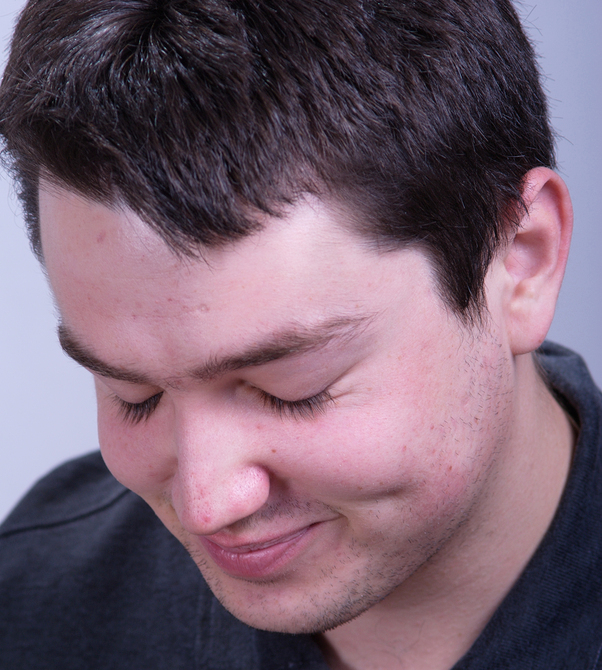
Question: When I blush, is my face as red as I think it is?

Answer: Probably not!

blushing social anxiety

During my postgraduate training at Murdoch University in Perth, Western Australia, I was lucky to be involved with a fascinating research project related to blushing and worry about blushing. The team was led by Professor Peter Drummond, one of the leading authorities in blushing research. ABC Science in Australia published a great article about the work: Fear of blushing brings blush on itself.

For the project I was involved in [1], we looked at the actual physiological changes in people who had fear of blushing, and compared this to a control group. This involved measuring changes in blood flow in subject’s faces while they performed embarrassing or stressful tasks, such as delivering a speech and listening to it afterwards.  The results demonstrated that people with a fear of blushing tended to overestimate the extent of their actual physiological change. As Professor Drummond concludes in the article above “it turned out there was very little connection between how strongly people blush and how much they thought they were blushing”.  This is good news for people who are worried about blushing, as it suggests that their faces are not as red as they think.


Social Anxiety and Blushing

Professor Drummond’s more recent work examines the relationship between social anxiety and blushing. The results show that social anxiety is one of the best predictors of blushing. Therefore, as the title of the article suggests, the fear of blushing can be a self-fulfilling prophecy. This finding is valuable as it has direct practical implications for the treatment of social anxiety. In particular, it suggests that targeting the fear of blushing (e.g. through CBT) may have wider benefits.


References:

[1] Drummond, P.D., Back, K., Harrison, J., Dogg Helgadottir, F., Lange, B., Lee, C. (2007). Blushing During Social interactions in people with fear of blushing. Behaviour Research and Therapy, 45 (7), 1601-1608. More…


fdh


Fjola  Helgadottir, PhD, MClinPsych, is a clinical psychologist, a senior research clinician at the University of Oxford, and is a co-creator of AI-Therapy.com, an online CBT treatment program for overcoming social anxiety
 

Website Design

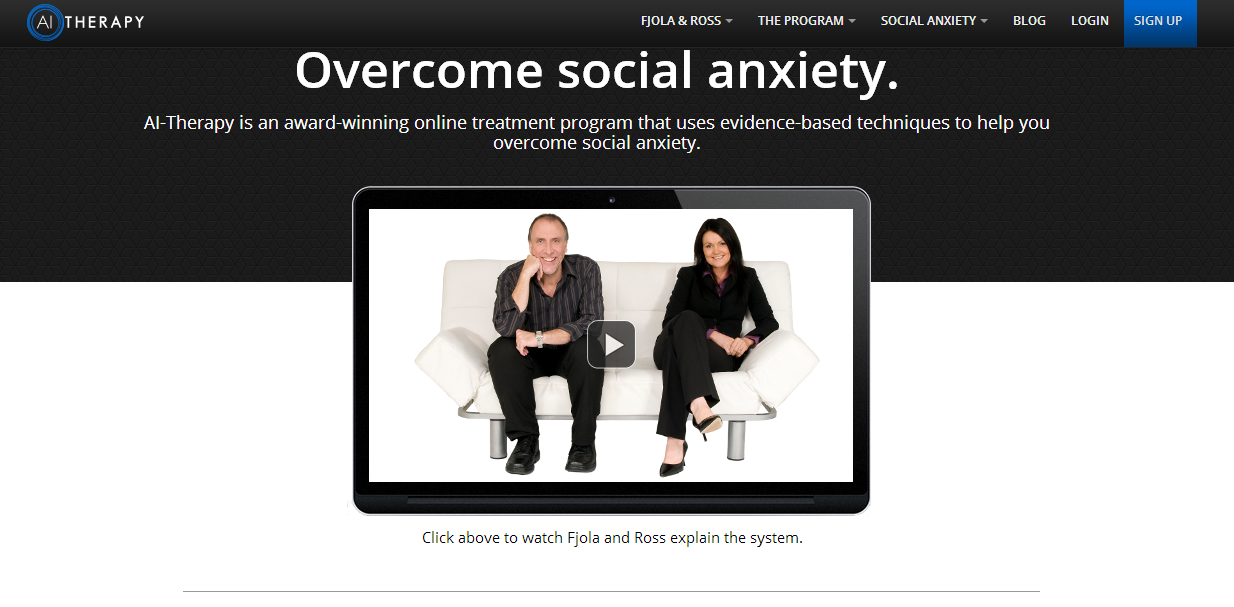
As you may have already noticed, we’ve given the AI-Therapy website a facelift. There are a number of improvements, including easier navigation, more content, and higher quality video.  Please take a look, and let us know what you think!


ai-therapy


Logo

We also have a new logo, which was designed by the same person who helped us with the new website (Rob Hogg of Skinny Whippet):


AI-Therapy-logo-transparent111


Conference Travel

We’re pretty excited to be going to the World Congress of Behavioral and Cognitive Therapies (WCBCT 2013) in Lima, Peru in July this year. This conference is held every three years, in various countries around the world. It provides an opportunity for researchers and clinicians to meet and discuss the “state of the art” in CBT.

I will be giving two talks at the conference:

  1. I was honoured to be invited to speak in a symposium with world’s leaders in online CBT (the other speakers are Gerhard Andersson and Per Carlbring from Sweden, Pim Cuijpers from Netherlands, and Nick Titov from Australia). The title of the symposium is The latest developments in internet-based treatments of common mental disorders. I will be speaking about some of my work at the University of Oxford, as well as the latest developments with AI-Therapy.
  2. My second talk is based on work I conducted with Ross Menzies of the University of Sydney and Mark Jones of the University of Queensland. The title is Superstitious behaviour in Iceland during and after the global financial crisis simulates the aetiology of obsessive-compulsive disorder.


We’re pretty busy these days, but there are exciting times ahead!


fdh


Fjola  Helgadottir, PhD, MClinPsych, is a clinical psychologist, a senior research clinician at the University of Oxford, and is a co-creator of AI-Therapy.com, an online CBT treatment program for overcoming social anxiety

 

I’m a huge fan of the show “Parks and Recreation” by Amy Poehler. In fact, I even wrote a blog about how much we can learn from the main character (Leslie Knope), who has a fantastic outlook on life. However, I was pretty disappointed when I came across this video of Amy Poehler giving hints about how to deal with social anxiety:

Most of this sounds like common sense advice. However, if you are a regular reader of my blog you will have noticed that all she is doing is promoting “safety behaviours“. She recommends the following:

  • Breathe
  • Reach out to a friend (e.g. text message or phone call)
  • Find a place where you feel more comfortable, such as a corner or couch
  • Remember that you can always leave without telling anyone

These are classic examples of safety behaviours. Yes, it’s true they may help you get through a particular social event, but the risk is that these behaviours are maintaining the underlying anxiety in the long run. It would be much better to target the thoughts and behaviours that are causing the anxiety in the first place (for example, using CBT).

Don’t get me wrong – I know that Amy Poehler means well, and I’m still a huge fan. However, we have to remember that there is a difference between advice that “makes sense”, and advice that has been proven effective in carefully controlled experiments. Unfortunately, just because you’re a brilliant actress, it doesn’t mean you are up to date with the latest findings in evidence based clinical psychology. Let’s make a deal Amy – you keep rolling out those episodes of Parks and Rec, and we’ll keep an eye on the psychology journals.

For those who are not regular readers of my blog, here are a few that mention safety behaviours:


fdh


Fjola  Helgadottir, PhD, MClinPsych, is a clinical psychologist, a senior research clinician at the University of Oxford, and is a co-creator of AI-Therapy.com, an online CBT treatment program for overcoming social anxiety

 

Consider this situation – you are getting ready for a first date, and you think to yourself “how can I sound intelligent tonight?”. Many of us have thoughts like this. However, spending too much time trying to make yourself sound intelligent can actually be counter-productive. Furthermore, too much thinking about sounding intelligent may be a sign of untreated social anxiety (for more symptoms, you can take our 10 question social anxiety test).

Central to social anxiety is the perceived cost of being evaluated negatively. For example, one might think “if I don’t sound smart, they’ll never agree to a second date”. This type of conditional beliefs can lead people to go to significant lengths to avoid being judged negatively by friends, family, strangers, colleagues, potential romantic partners, etc. The actions used to prevent these undesired outcomes are what psychologists refer to as safety behaviours, which I’ve discussed previously.

road_block_arrow_400_clr_6376

One of the problems with safety behaviours is that they are rarely challenged. It’s like you spend your life on one side of a brick wall, but never get to see what it’s like on the other side (where you don’t engage in these behaviours).

Let’s return to dating. A quick Google search has a lot of “helpful” advice on how to impress other people on a date (e.g. see wikihow.com). An example is to always “spend a few seconds thinking before you speak”. In my opinion, this is an example of a safety behaviour, and it can actually be detrimental. Also, a lot of the advice reinforces the idea that a person going on a date needs to spend a lot of time preparing, instead of just being themselves. What are some possible consequences of all this preparation?


1. If the date is successful, you may attribute it to specific behaviours or preparation, rather than the true cause (e.g. they liked you!).

This will reinforce the safety behaviour, and maintain underlying anxieties in the long run. You may never learn that people actually like you the most when you are being yourself.


2. Over-rehearsed communication and presentation can be a turn off.

In other words, it might be a contributing factor to a negative outcome.


3. The preparation can be a lot of work.

In fact, people with more serious social anxiety will actually cancel social events due to all the preparation they feel is necessary before going out. This is sad, as they are missing out on many opportunities in life. Who knows what would have happened if you went for that cup of coffee (even though you were feeling tired, and unprepared?). You may have met a great friend or future partner.

CBT is a technique that can be used to tackle the thoughts and behaviours that are maintaining social anxiety. It can be used by anyone who wishes to be more relaxed in social situations. In my opinion, being relaxed and yourself is the key to a successful first date.

brick_wall_arrow_400_clr_6283


fdh


Fjola  Helgadottir, PhD, MClinPsych, is a clinical psychologist, a senior research clinician at the University of Oxford, and is a co-creator of AI-Therapy.com, an online CBT treatment program for overcoming social anxiety

 

“Should kids believe in Santa?” is a hot topic in Iceland at the moment. On one hand, critics say that we are lying to our children, and it is wrong to teach them to believe in a fictitious man who defies the laws of nature. On the other hand, supporters say that believing in Santa is part of what makes Christmas so special for children, and who are we to take that away from them?

Some people remember the exact moment when they found out Santa wasn’t real. I suppose for others it is more of a gradual realisation. Last Christmas a cousin of mine told me that I was responsible for her learning the truth. Back when we were young, we were at a family party and got into an argument about Santa’s existence. I launched a scientific expedition, and made her follow me to the basement where we saw “Santa” go into a room, and an older family friend came out! I had forgotten this, but it was a vivid memory for her. For me, I do remember my older sister spilling the beans to me the previous year.

Is believing in Santa ridiculous? Should it be stopped? My answer is probably not. Here are three reasons why:


1. Most importantly, believing in Santa is a FUN for children, and I believe it is harmless fun.

In Iceland you get a present for each of the 13 days leading up to Christmas, everyone of which is left in a shoe by one of the mischievous Yule Lads. I love seeing how excited my nieces get about the Yule Lads.


2. Children’s minds work differently than adult’s minds.

When we are very young, we are wildly creative, and we are willing to believe the impossible at the drop of a hat. This is part of normal childhood development. I feel that discovering the truth about Santa can be an important opportunity to teach children about critical thinking. As they age, kids need to learn not to believe everything they are told, and learn methods of distinguishing truth from fiction. It can even be fun. For example, when my husband was young, he and his sister collected handwriting samples from all the adults in the house, and asked Santa to leave a note. On Christmas day th
ey set up a forensic lab to compare the handwriting samples! Instead of feeling lied to and betrayed, they enjoyed the process of discovery. (You won’t be surprised to hear that they both went on to careers in science and research.)

3. The Icelandic Yule Lads give parents a perfect opportunity to apply general behaviour principles on their kids.

Kids learn that positive behaviour (e.g. such as going to bed on time) can lead to a reward (e.g. a new toy in their shoe in the morning). One of my favourite books on the topic is called the Power of Reinforcement. It points out that instead of the “carrot and stick” approach, the “carrot, carrot and more carrot” can be best. Perhaps that’s why there are 13 Santas in Iceland?


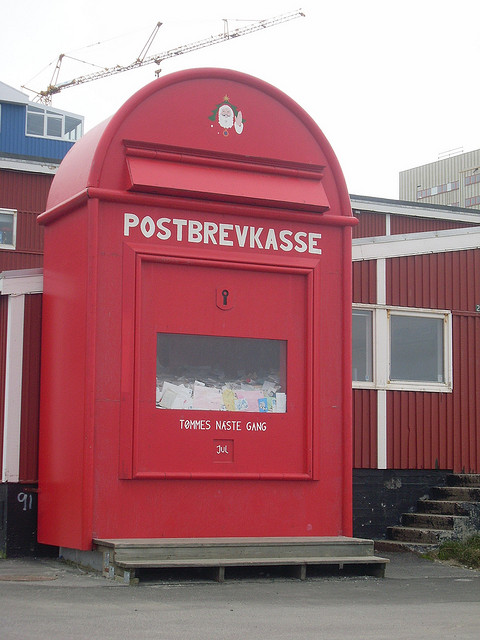
Apparently a lot of mail directed to the “North Pole” ends up in this huge box in Greenland. If a little child has gone to the effort of writing a letter to Santa, I’d be the last person to break their little heart with the truth. I think my time would be better spent asking grown adults why they believe in things that are equally improbable.


fdh


Fjola  Helgadottir, PhD, MClinPsych, is a clinical psychologist, a senior research clinician at the University of Oxford, and is a co-creator of AI-Therapy.com, an online CBT treatment program for overcoming social anxiety